

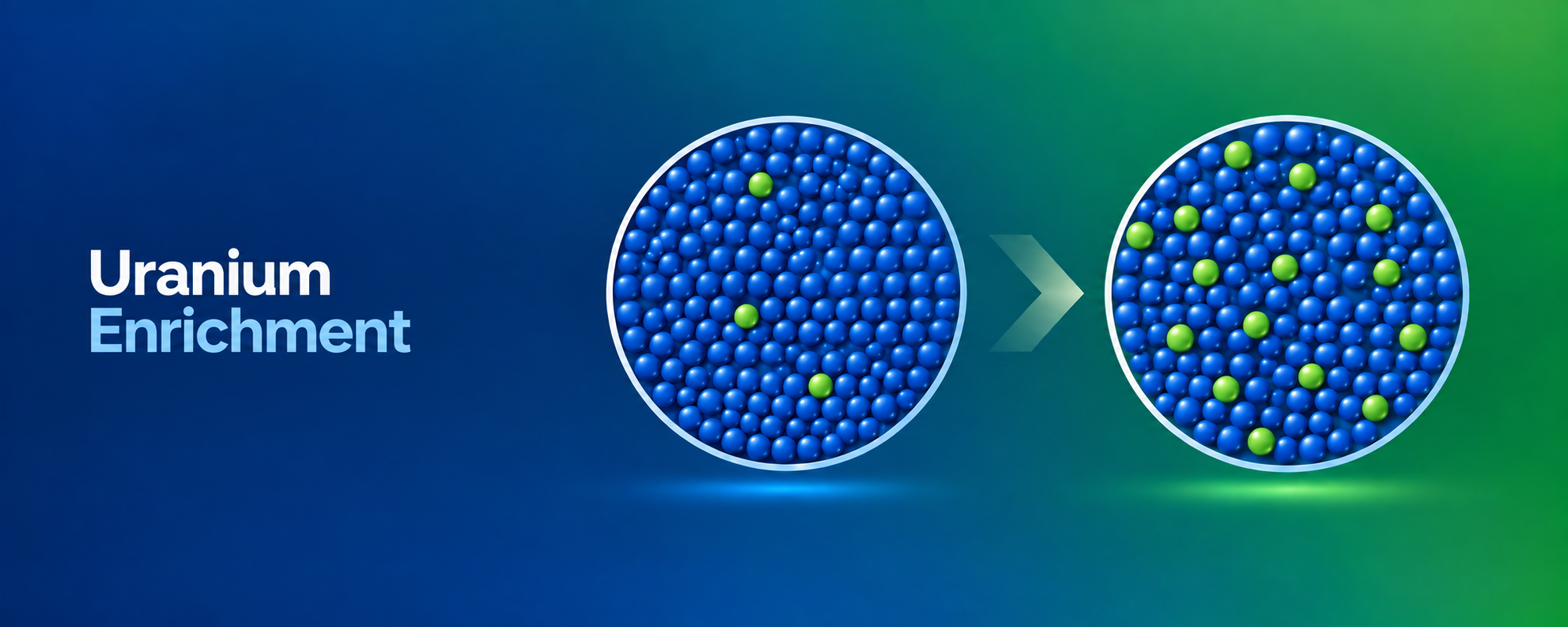
What is Uranium Enrichment?

Uranium enrichment is the process of raising the concentration of the fissile isotope U-235 to the level needed to power nuclear reactors.
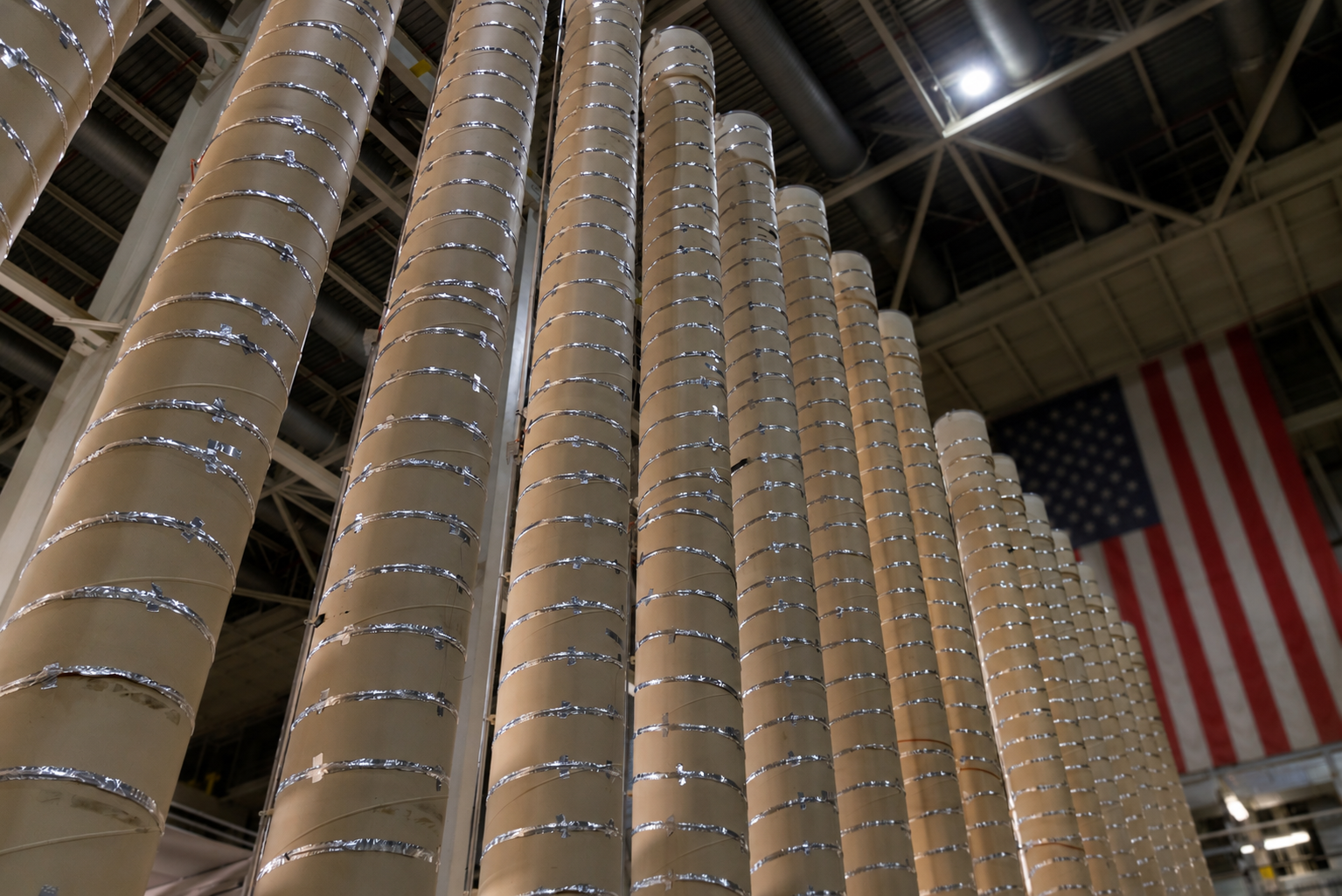
How does Centrus enrich uranium?

Centrus uses gas centrifuges, which spin uranium hexafluoride gas at high speeds. This separates the lighter U-235 from heavier U-238.

Multiple centrifuges are linked together in a cascade, gradually raising U-235 levels to produce fuel for nuclear reactors.

When uranium comes out of the ground, the U-235 concentration is less than one percent. Most of the world’s large-scale, commercial nuclear reactors require Low-Enriched Uranium (LEU) fuel with a U-235 concentration just below 5 percent. Many advanced reactors require an enrichment level up to 20 percent, called High-Assay, Low-Enriched Uranium (HALEU).

The Rise and Fall of American Enrichment Leadership

How did the United States fall so far behind in uranium enrichment — a technology America invented? And what are we doing to reclaim that leadership?

The Nuclear Fuel Supply Chain

Mining/Milling

Mining companies use various techniques to extract uranium ore from the earth. Once extracted, miners process the ore at a mill, concentrate it into uranium oxide and ship it to a conversion facility.

Conversion

At a uranium conversion plant, uranium oxide combines with fluorine gas to create uranium hexafluoride (UF6), a chemical compound that is a powder at room temperature and a gas when heated. UF6 is packed into cylindrical containers and shipped to an enrichment plant.

Enrichment

Feed cylinders are heated so that the UF6 becomes a gas. This gas is fed into a series of centrifuges — called a cascade — which gradually raise the U-235 concentration to the desired level.

Deconversion

Enriched UF6 gas is processed to change into a different chemical form prior to fuel fabrication. The existing fleet of light water reactors require uranium oxide. Advanced reactors may require oxide forms or uranium metal.

Fuel Fabrication

Fuel fabrication plants process the enriched uranium into fuel assemblies. For today’s light water reactors, this involves forming uranium oxide into small ceramic pellets. These pellets are loaded into metal tubes that are bundled into fuel assemblies and shipped to nuclear power plants. Next-generation reactor designs — many of them fueled with HALEU — utilize a variety of other fuel forms.

Follow Us for Company Updates and New Job Postings